
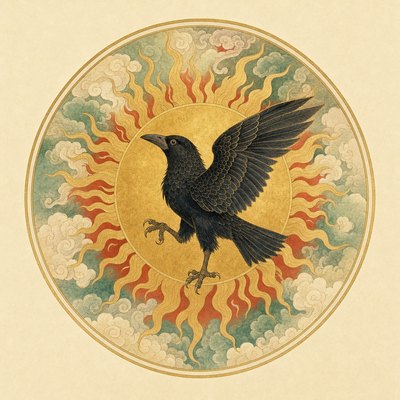
Tai Yang, the Sun, represents light, visibility, generosity, principle, and the urge to contribute openly. In Zi Wei Dou Shu it is one of the clearest symbols of public presence: it wants to illuminate, guide, protect, and act in a straightforward way. This star often shows a person’s relationship with honor, reputation, father figures, authority, and the wish to be useful in the wider world. Unlike Tian Tong, which is gentle and ease-seeking, Tai Yang is more duty-conscious and outwardly active. Unlike Wu Qu, which is practical and disciplined about results, Tai Yang leads through warmth, ideals, and example. Its condition depends strongly on brightness: when well placed, it brings confidence, generosity, and moral clarity; when weaker, the same solar quality can become overextension, pride, or the feeling of giving more than one receives.
Tai Yang in the Life Palace
With Tai Yang in the Life Palace, a person usually comes across as open, direct, and easier to read than average. There is often a natural wish to stand in the light rather than work entirely behind the scenes, whether through leadership, teaching, advocacy, management, or simply being the one who sets the tone for others. These people often care about fairness and may feel responsible for protecting, organizing, or encouraging those around them. At their best, they are generous with time, attention, and guidance, and they prefer clarity over manipulation. They tend to value being respected for character as much as for competence. Because Tai Yang is a giving star, one recurring lesson is balance: helping without performing martyrdom, leading without dominating, and staying warm without becoming naïve. When the star is strong, confidence is steady and public life suits them well; when weaker or afflicted, they may struggle with recognition, pride, or inconsistent energy despite sincere intentions.
Strengths
- generous and protective
- clear moral instinct
- visible leadership presence
- frank, uplifting communication
Blind spots
- gives too much too quickly
- pride when unappreciated
- difficulty hiding feelings
- overidentifies with duty
Love and relationships
In relationships, Tai Yang brings warmth, sincerity, and a wish to care for a partner in visible, practical ways. It tends to prefer clear intentions over emotional games, and many people with strong Tai Yang want a relationship they can be proud of publicly. In the Spouse Palace, it often points to a partner who is upright, capable, generous, or socially noticeable, though sometimes busy, idealistic, or strong-willed. Harmony improves when admiration is mutual and roles are not based only on rescuing or providing. If afflicted, Tai Yang can show one-sided giving, ego clashes, or disappointment when appreciation is not expressed openly.
Career
Tai Yang is well suited to work that requires visibility, responsibility, and influence: leadership, education, consulting, public service, law, media, management, advocacy, and roles where one guides others. Its style is direct, principled, and example-based rather than secretive. In the Career Palace, it often favors professions tied to reputation, authority, communication, or helping institutions function more fairly and clearly. These people work best when they can make decisions, set standards, or represent something larger than themselves. If the star is strained, they may take on too much, become frustrated by weak leadership, or tie self-worth too closely to recognition.
Wealth
Tai Yang is not primarily a hoarding star; it tends to earn through visibility, leadership, skill, and reputation, then spend generously or reinvest in people and causes. Wealth often grows more steadily when judgment is practical and giving is bounded. In favorable conditions, it supports income through public-facing work, management, advisory roles, or trusted authority. If afflicted, money may leak through overgenerosity, image-conscious spending, or carrying others’ burdens too often.
Which star sits in your Life Palace?
Enter your birth date and time to see your free Zi Wei Dou Shu chart: all 12 palaces, your major stars and your current 10-year period, as an image you can save.
See my free Zi Wei chart →Classic star combinations
- 太阳 + 太阴 Tai Yin: Sun and Moon together balance action and receptivity, often giving broad perspective, social intelligence, and stronger public-private integration.
- 太阳 + 巨门 Ju Men: This pairing sharpens speech and conviction, producing an outspoken advocate, teacher, critic, or debater whose words strongly affect reputation.
- 太阳 + 天梁 Tian Liang: A classic noble combination that emphasizes protection, ethics, guidance, and the role of elder, mentor, or principled authority.
- 太阳 + 武曲 Wu Qu: Sun with Wu Qu blends ideals with execution, supporting capable leadership that combines visibility, discipline, and practical management.
Tai Yang in each of the 12 palaces
| Life Palace 命宫 | In the Life Palace, Tai Yang gives an open, principled, visible character with a strong wish to contribute and lead by example. |
| Siblings Palace 兄弟宫 | In the Siblings Palace, it often shows straightforward ties with siblings, with one sibling possibly taking a responsible, prominent, or protective role. |
| Spouse Palace 夫妻宫 | In the Spouse Palace, it points to a partner who is generous, upright, noticeable, or career-engaged, though pride and strong opinions need tact. |
| Children Palace 子女宫 | In the Children Palace, Tai Yang suggests active, expressive children or a parenting style that emphasizes guidance, standards, and encouragement. |
| Wealth Palace 财帛宫 | In the Wealth Palace, it favors income through reputation, leadership, and public-facing work, but advises moderation in generosity and image spending. |
| Health Palace 疾厄宫 | In the Health Palace, Tai Yang often shows stress patterns linked to overwork, pressure to perform, or difficulty resting rather than quiet withdrawal. |
| Travel Palace 迁移宫 | In the Travel Palace, it supports visibility away from home, helpful patrons, and opportunities through movement, outreach, or work in public settings. |
| Friends Palace 交友宫 | In the Friends Palace, it attracts capable, active, socially connected people, while also bringing responsibility within networks and teams. |
| Career Palace 官禄宫 | In the Career Palace, Tai Yang is strong for leadership, teaching, administration, public roles, and work where integrity and recognition matter. |
| Property Palace 田宅宫 | In the Property Palace, it can indicate pride in the home, a preference for bright and active spaces, or property matters tied to status and family duty. |
| Fortune Palace 福德宫 | In the Fortune Palace, Tai Yang finds peace through purpose, usefulness, and clarity, though true rest comes from easing the need to carry everything. |
| Parents Palace 父母宫 | In the Parents Palace, it often highlights a strong influence from the father or another guiding authority figure, whether supportive, demanding, or highly visible. |
Frequently asked questions
Is Tai Yang a good star in Zi Wei Dou Shu?
Traditionally yes, especially when bright and well supported, because it signifies generosity, honor, guidance, and public presence; its challenges usually come from overgiving, pride, or uneven recognition rather than hidden malice.
What does Tai Yang in the Life Palace mean?
It usually describes someone direct, warm, principled, and easier to notice, with a natural tendency toward leadership, teaching, helping, or taking responsibility in visible ways.
What happens when Tai Yang is in the Spouse or Career Palace?
In the Spouse Palace it often points to a capable, upright, noticeable partner and a need for mutual respect; in the Career Palace it is favorable for public work, leadership, education, management, and roles built on reputation.
Other major stars
紫微 Zi Wei · The Emperor · 天机 Tian Ji · The Strategist · 武曲 Wu Qu · The Marshal · 天同 Tian Tong · The Comforter · 廉贞 Lian Zhen · The Judge · 天府 Tian Fu · The Treasurer · 太阴 Tai Yin · The Moon · 贪狼 Tan Lang · The Charmer · 巨门 Ju Men · The Debater · 天相 Tian Xiang · The Minister · 天梁 Tian Liang · The Guardian · 七杀 Qi Sha · The General · 破军 Po Jun · The Pioneer
Updated 2026-11-05.